UF Institute of Food and Agricultural Sciences logo
Give      University of Florida
Resources
    Toggle Search Form
    GIVE UNIVERSITY OF FLORIDA
    • HOME
    • About Us
          • About Us
          • Meet the team
          • Contact Us


    • Volunteers
          • Become a Volunteer
          • Volunteer Hub
          • Collection Centers
          • Volunteer Resources
    • Data/Reports
          • Data Dashboard
          • Reports
          • Data Request Form
          • Citation Instructions
          • Bathymetric Maps
    • Research
    • Teaching
    • Laboratory
    • Resources
          • Books
          • Information Circulars
          • Pamphlets
          • Educational Videos
          • Newsletters
          • Bibliography
          • Additional Lake Management Resources


    Florida LAKEWATCH

    Florida LAKEWATCH

    Teaching & Educational Outreach


    Teaching 

    The Florida LAKEWATCH program has a long history of teaching undergraduate students at the University of Florida. You can read more about our teaching efforts in this newsletter article from 2025: https://new.express.adobe.com/webpage/QJdX8mMYwfZKO#from-the-lakeside-to-the-lab.   

    LAKEWATCH director, Dr. Lescord, teaches two concurrent courses at the University of Florida, within the School of Forests, Fisheries, and Geomatics Sciences and the Marine Sciences major: Introduction to Freshwater Fisheries Science, an undergraduate level course, and Fish & Limnology, a graduate level course. Students in these courses use LAKEWATCH data, information, and research to learn fundamental theories in freshwater science. In this way, volunteers are helping teach the next generation of limnologists with their data!  

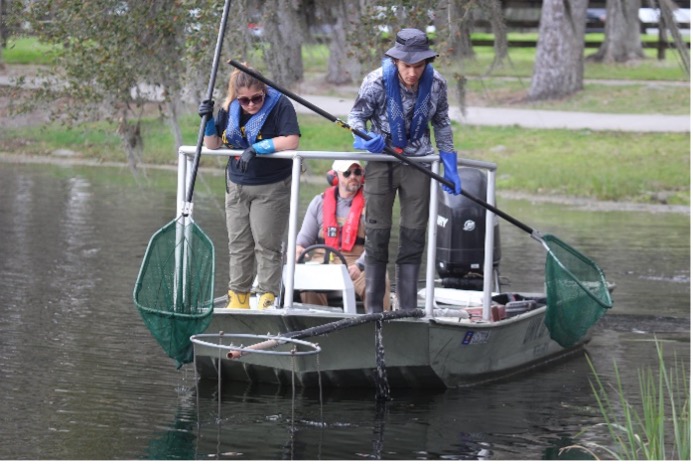
    Our courses also provide valuable hands-on learning opportunities in the field and laboratory. More specifically, students spend 6 weeks sampling Lake Alice on the UF campus, collecting data on the fish community and water quality following LAKEWATCH procedures. The students also visit the LAKEWATCH analytical facility, where they learn to process their water samples and analyze fish tissues for mercury levels using our state-of-the-art equipment. After, they learn to responsibly manage all the data they generate in both the field and lab. In fact, many learn how to code for the first time, using common approaches necessary for modern fisheries and aquatic research. Students also get to know LAKEWATCH staff and graduate students, who are vital teaching assistants and co-instructors of these courses and enable our in-depth learning experiences throughout the semester.

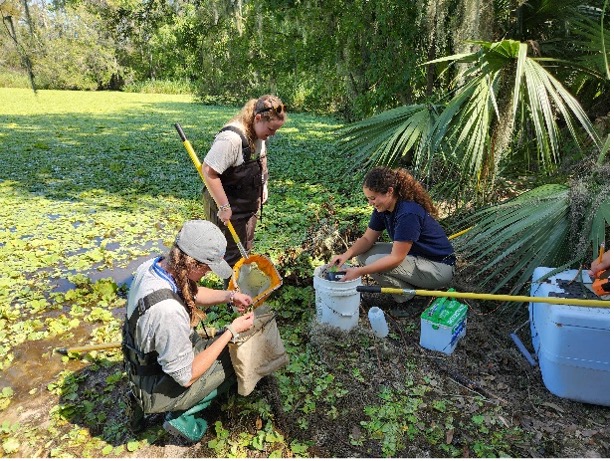
    A small field team works along a vegetated shoreline collecting aquatic organisms and plant material. Nets, buckets, and sample containers are spread near the water’s edge beside floating vegetation and palms.
    Three people work from a small flat‑bottom boat on a calm waterway, using long‑handled nets to collect aquatic samples. The boat is positioned near the shoreline, with trees, grass, and shallow water visible.

    Lecture topics covered in our courses include: 

    • Lake and river morphology 
    • Water quality 
    • Freshwater fish  
    • Aquatic macrophytes 
    • Aquatic benthic macroinvertebrates 

    Laboratory topics include: 

    • Electrofishing techniques 
    • Shoreline sampling approaches 
    • Invertebrates and fish identification and taxonomy 
    • Water quality sampling (following LAKEWATCH volunteer protocols!) 
    • Analytical approaches and tools 
    • Quality assurance and control measures 
    • Data management plans 
    • Graphing and statistics in R 
    • Vital “soft” skills in freshwater science 
    • Library tools for finding quality research 
    • Slide development and presentation delivery 
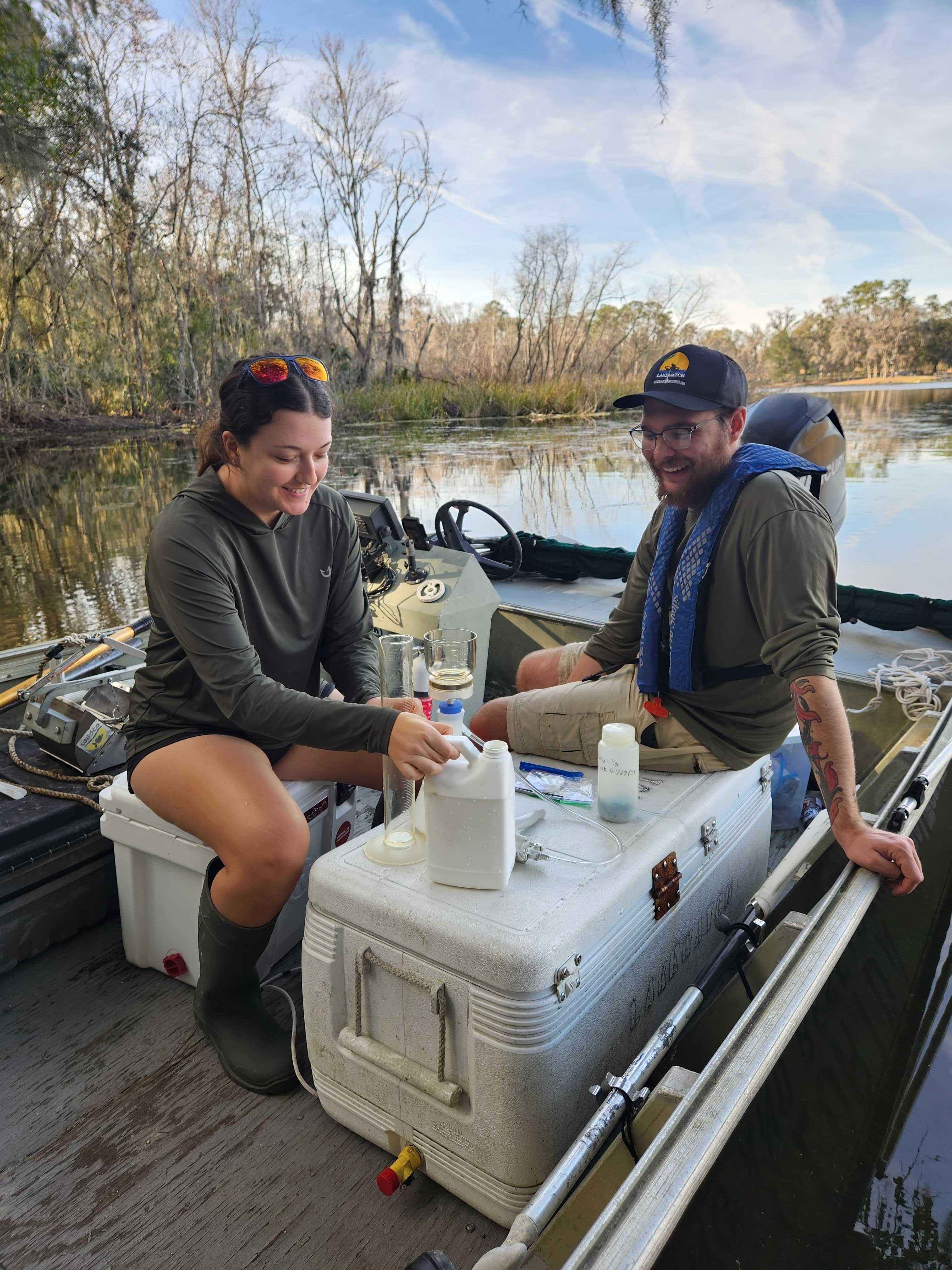
     

    Two field technicians sit in a small boat on a calm river, preparing water samples. A cooler serves as a workspace with bottles, tubing, and instruments, while trees and reflections line the waterway.
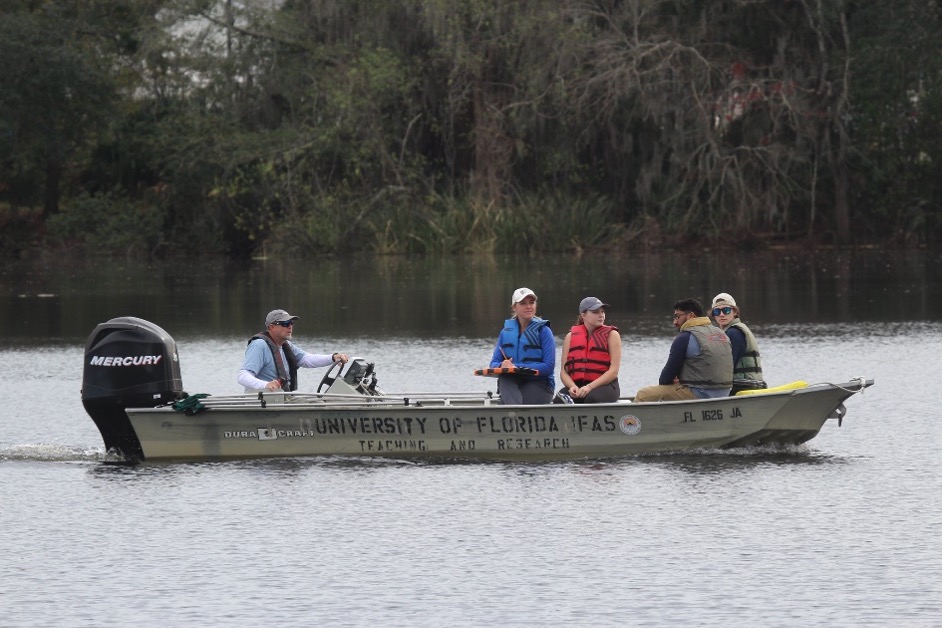
    A small aluminum boat labeled University of Florida IFAS floats on calm water carrying a group of researchers wearing life vests. Trees line the far shoreline under overcast skies.

    Interested students can contact Dr. Lescord (lescord.g@ufl.edu) or register for the course directly using the course codes FAS4305c (for Introduction to Freshwater Fisheries Science) and FAS6932 (for Fish & Limnology). 


    Educational outreach 

    When our capacity permits, the LAKEWATCH program engages in other educational opportunities, such as 4H events, lab tours, water sampling demos. Often, these events are done in collaboration with our sister program, Fishing for Success, which was co-founded by Drs. Dan Canfield and Chuck Cichra.  

     This program is a multifaceted program of the University of Florida that uses fishing and other related activities as the “hook” to introduce children of all ages to various aspects of fisheries and aquatic sciences. For more information, see: https://ffgs.ifas.ufl.edu/extension/fishing-for-success/.  
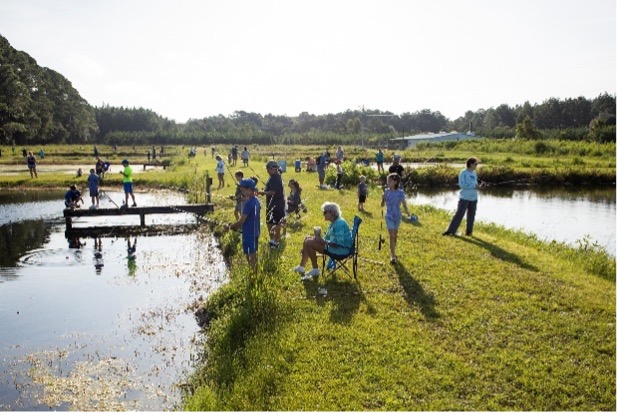
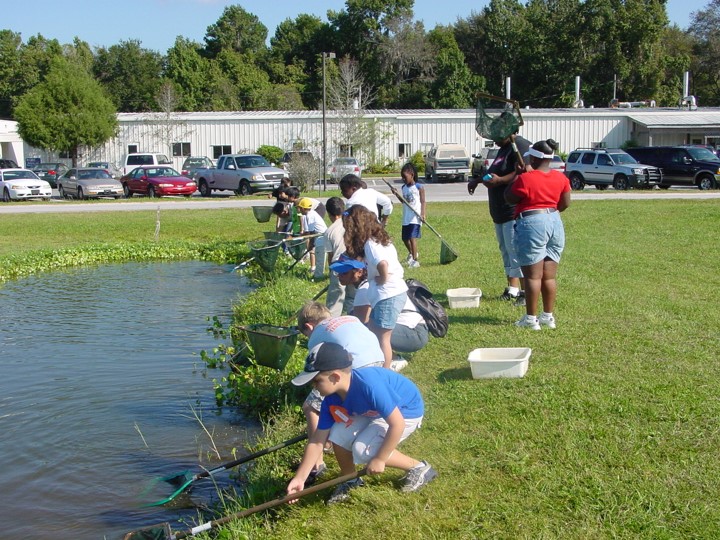
    Children and adults line the grassy bank of a pond using dip nets to collect aquatic organisms. White collection trays sit on the ground nearby, suggesting an educational hands‑on water science activity.
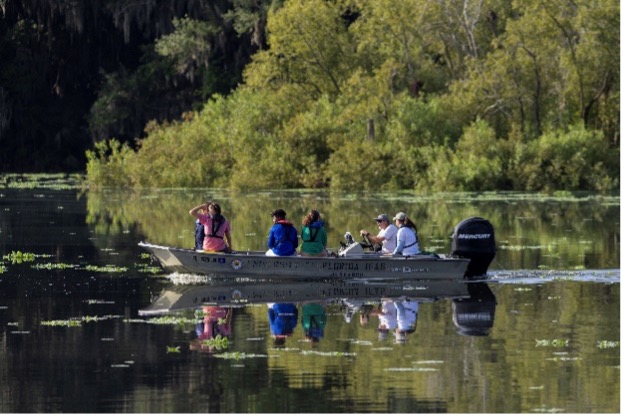
    A small research boat carries a group of people across a still, vegetation‑lined lake. Sampling equipment and clipboards are visible as the boat moves through floating aquatic plants with reflections on the water.
    A large group of people fish and observe along the grassy edge of a pond and from a small dock. Some sit in folding chairs while others stand at the water’s edge, creating a community outdoor recreation scene.
    University of Florida Logo
    Contact

    Feedback
    Florida LAKEWATCH
    7922 NW 71st Street, Gainesville, FL 32653-3071
    (352) 392-4817

    Land Grant Mission
    • Teaching
    • Research
    • Extension
    Information
    • Ask IFAS (EDIS)
    • UF/IFAS Experts
    • UF/IFAS Blogs
    • UF/IFAS Bookstore
    Policy
    • Accessible UF
    • EEO Statement
    • IFAS Web Policy
    • SSN & UF Privacy
    • Analytics (Google Privacy)

    © 2025 University of Florida, IFAS Last Modified:Mon, 2 Feb 2026 15:04:09 EST